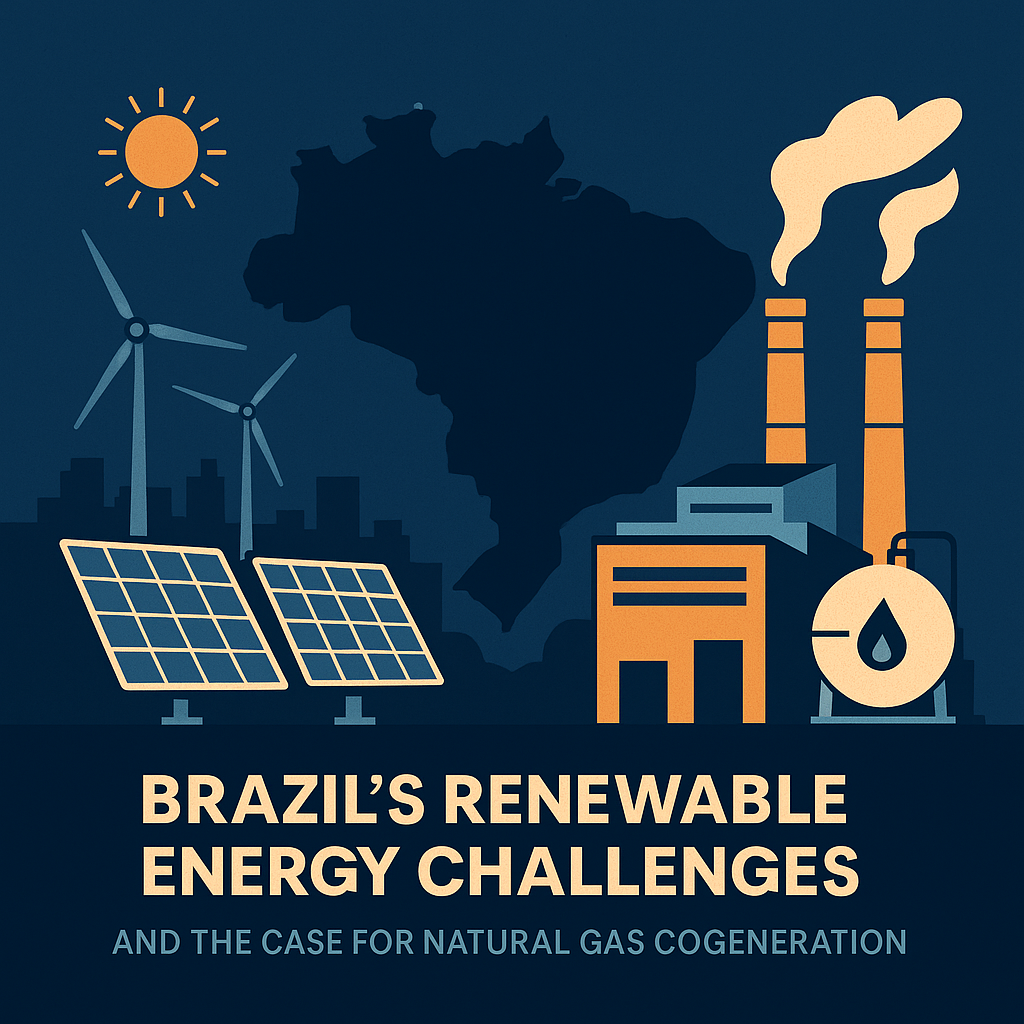
Brazil has long stood out on the global stage for its clean energy credentials. With more than 80% of its electricity derived from renewable sources—primarily hydro, wind, and solar—the country has become a benchmark for green power generation. Yet, beneath the surface of this success lies a sector undergoing deep transformation, now facing growing operational, regulatory, and economic challenges. Investors and developers are confronting the reality that wind and solar markets in Brazil are no longer risk-free frontiers, but maturing industries with growing pains.
The Challenges Facing Solar and Wind in Brazil
1. Market Saturation and Price Compression
In recent years, the rapid expansion of wind and solar capacity has led to oversupply in specific regions, particularly in the Northeast (Nordeste), which hosts the bulk of the country’s variable renewable energy (VRE). This concentration has had two critical effects:
- Curtailment: Grid bottlenecks and transmission constraints have forced operators to reduce output or even shut down generation during high VRE periods. The issue is particularly acute in states like Bahia and Rio Grande do Norte, where solar and wind plants often face prolonged curtailment with little or no compensation.
- Spot Price Volatility and Depressed ACL Prices: With abundant supply and insufficient demand-side flexibility, energy prices in the free market (ACL) have been driven to historic lows in some regions, undermining the revenue expectations of both new and operational renewable projects.
2. Changing Regulatory Landscape: The GD2 Framework
The enactment of Law 14.300/2022 (the “Marco Legal da Geração Distribuída”) and its phased implementation through the “GD2” rules brought long-awaited clarity to the distributed generation (DG) sector, particularly solar PV. However, the regulatory shift also brought a reduction in economic incentives:
- Grid fee exemptions were partially eliminated or limited in time.
- New projects registered after the transition deadlines are subject to less favorable compensation models, significantly reducing the internal rate of return (IRR) for residential and commercial DG systems.
As a result, investor appetite for solar DG is cooling, especially in markets with high competition, low margins, and limited long-term offtake contracts.
3. The Flexibility Gap in Brazil’s Power System
Perhaps the most pressing systemic challenge is the lack of dispatchable, flexible capacity to balance the intermittency of VREs. Hydropower has traditionally played this role, but climate variability and environmental restrictions are weakening its reliability as a “battery” for the system. The country lacks enough:
- Fast-ramping thermal units
- Demand response mechanisms
- Grid-scale storage
This creates operational stress on the grid, increases the cost of balancing services, and ironically limits the integration of more renewables—precisely the technologies that need flexible backup.
Natural Gas Cogeneration: A Strategic Opportunity
In this evolving scenario, natural gas-fired generation and cogeneration (CHP) are emerging as highly strategic alternatives. While often seen as transitional, gas assets can offer long-term value and help address the structural deficiencies of the Brazilian power system.
1. Revenue Diversification and Contracted Cash Flows
Gas-based cogeneration systems—especially those embedded in industrial or large commercial sites—offer:
- Dual revenue streams from electricity and thermal energy (steam, hot water, cooling)
- Access to bilateral contracts (PPAs) with tailored pricing
- Opportunities to act as backup power or grid support, creating reliability premiums
2. Strategic Role in System Flexibility
Unlike wind and solar, gas plants provide dispatchable, on-demand power, often with ramp-up capabilities unmatched by other technologies. In a market increasingly shaped by:
- Negative prices during VRE surpluses
- High peak prices during windless or sunless hours
- Grid stability concerns
Gas cogeneration provides a reliable anchor for energy-intensive consumers and adds essential resilience to the system as a whole.
3. Synergies with Industrial Clusters and ESG Goals
Industrial clusters—such as those in São Paulo, Minas Gerais, and Rio de Janeiro—are ideal environments for distributed gas cogeneration:
- Many are already connected to the natural gas grid.
- They seek to reduce Scope 2 emissions by optimizing energy use.
- CHP systems improve energy efficiency significantly, supporting ESG compliance and cost savings.
Moreover, new business models—such as Energy as a Service (EaaS) or long-term thermal outsourcing contracts—allow project developers and investors to unlock stable cash flows without heavy capex from end users.
Gas and Renewables: A Complementary Path Forward
This is not a case of gas versus renewables. Instead, Brazil must embrace a hybrid path, where:
- Wind and solar continue to supply zero-marginal-cost energy
- Gas cogeneration fills in the reliability and flexibility gaps
- Energy storage becomes feasible as prices fall and regulation matures
In this context, well-structured gas-based projects are likely to capture more value, particularly:
- In regions exposed to curtailment
- In behind-the-meter industrial setups
- In flexible PPAs linked to system demand peaks
Conclusion: Positioning for a Smarter, More Resilient Energy Mix
The Brazilian power sector is undergoing a complex transition. While renewables will continue to lead the capacity additions, value capture is no longer guaranteed without precise locational, contractual, and technological strategies.
For investors and energy users seeking predictable returns, operational control, and grid-resilient energy models, natural gas cogeneration stands out as a high-potential solution—especially when paired with digital controls, on-site use, and regulatory optimization.
At Heavybrains, we help energy investors and strategic players understand these market shifts, evaluate opportunities, and structure viable business models in Brazil’s evolving electricity sector. Whether your focus is clean energy, system flexibility, or industrial resilience, our team is ready to support your strategic move in this new energy landscape.