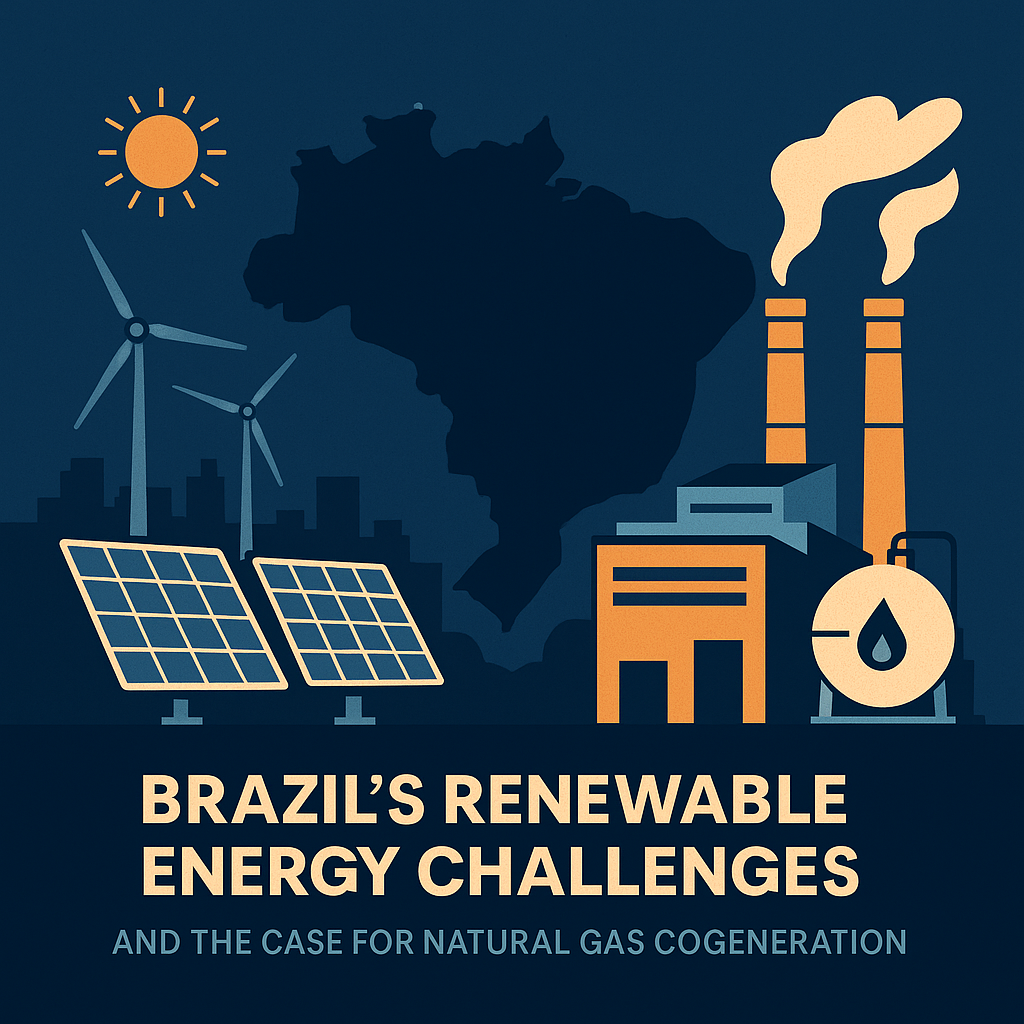
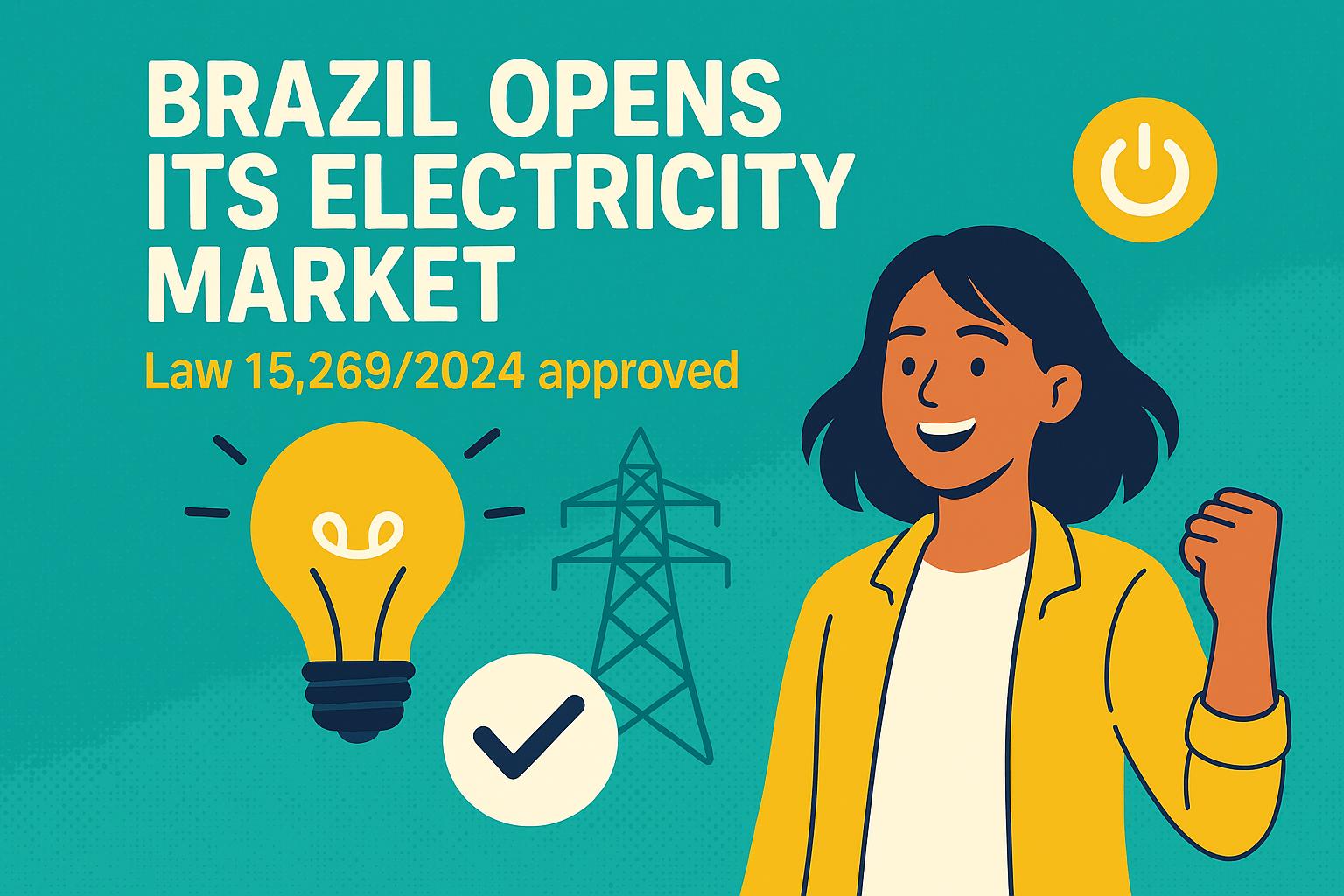
Brazil has taken a historic step toward modernizing its energy sector with the enactment of Law 15,269/2024, a landmark regulation that fully opens the country’s electricity market to competition. This reform positions Brazil alongside global leaders in energy liberalization, such as the UK, Portugal, and parts of the United States, and creates significant opportunities for investors seeking to enter one of the most dynamic energy markets in Latin America.
Context: From Captive Market to Full Liberalization
For nearly three decades, Brazil’s electricity market operated under a hybrid model. Large industrial consumers could choose their energy suppliers through the Free Contracting Environment (ACL), while residential and small businesses remained tied to regulated tariffs and local distributors. This structure limited competition and innovation, leaving millions of consumers without alternatives.
Law 15,269 changes this paradigm. It introduces a mandatory timeline for universal access to the free market, ensuring that every consumer, from large corporations to households, can select their electricity provider.
Key Changes Introduced by Law 15,269
- Full Market Opening
- Industrial and Commercial Consumers: Eligible to migrate within 24 months.
- Residential and Small Businesses: Eligible within 36 months, making November 2028 the deadline for complete liberalization. This phased approach guarantees a smooth transition while allowing stakeholders to prepare for the new competitive landscape.
- Creation of a “Supplier of Last Resort”
To ensure reliability, the law establishes a Supridor de Última Instância (SUI), a regulated entity that will supply energy to consumers whose contracts lapse unexpectedly. This mechanism mitigates risks for both consumers and investors, reinforcing market stability. - Tariff and Subsidy Reforms:
The law introduces justice in tariff structures, including a cap on the Energy Development Account (CDE), which historically inflated costs. It also ends new subsidies for transmission and distribution tariffs (TUSD/TUST), signaling a shift toward a market driven by efficiency rather than incentives. Existing benefits for current contracts remain protected, reducing uncertainty for ongoing projects. - Incentives for Innovation
Law 15,269 paves the way for energy storage systems, distributed generation, and renewable energy solutions. It also maintains favorable conditions for micro and mini-generation, ensuring that solar and other distributed resources remain attractive options for consumers and investors alike. - Consumer Empowerment and Market Dynamics
With universal access, consumers will enjoy personalized energy plans, flexible tariffs, renewable energy on demand, and environmental certificates (I-RECs). This competitive environment is expected to drive innovation, reduce long-term costs, and create new business models, including energy retailing and digital platforms for contract management.
Why This Matters for Investors
The opening of Brazil’s electricity market represents a multi-billion-dollar opportunity:
- Retail Energy Services: Millions of new customers will enter the free market, creating demand for aggregators, brokers, and digital platforms.
- Renewable Energy Expansion: Competitive pricing and consumer choice will accelerate investments in solar, wind, and storage.
- Risk Management Solutions: As volatility increases, hedging and energy trading services will become essential.
- Infrastructure and Technology: Smart grids, metering, and energy management systems will gain traction as distributors adapt to the new model.
Final Thoughts
Law 15,269 is more than a regulatory update—it’s a structural transformation that democratizes energy choice and fosters competition. For investors, this is the moment to position strategically in a market that is not only opening but also embracing innovation and sustainability. With clear timelines, robust safeguards, and a commitment to modernizing the sector, Brazil is signaling that its energy future is open for business.